How Will a Rise in Interest Rates Affect the Commercial Real Estate Market?

How Will a Rise in Interest Rates Affect the Commercial Real Estate Market?

In the past couple years, overall interest rates have risen several times in the United States. According to many experts, they are likely to finally stabilize in 2020. However, they have already risen sufficiently enough in 2018 and 2019, and we cannot be sure that the same won’t happen by the end of 2020, or especially the year after.

What Are “Bondable Lease” Investments and Are They Good to Own?

new blog2.jpg

A bondable lease is a sub-variant of the popular single-tenant net lease. These are, as the name partially implies, leased to a single tenant on a net basis, which means the tenant is responsible for a portion or all of the taxes involved, including maintenance costs and insurance fees for the property. 

In most cases, these leases are triple net, which means that the tenant is responsible for all operating expenses. The leases are, in most cases, long-term – from ten to 25 years and are often behind famous names like McDonald's and Starbucks. 

As you can see, most of what's involved in these net leases is extremely beneficial for the owner. They are already proving to be worthwhile investments for all landlords and real estate investors. 

However, there’s more to it:

The Many Benefits of Bondable Leases

Triple net or NNN leases have a wide set of benefits:

They boast relatively high liquidity as there is an extensive investor network behind these leases, including numerous big names, besides the one we already mentioned.

They have reasonably high entry price points. One would expect that NNN leases are incredibly costly as they bring forward many benefits. However, only properties behind large companies tend to trade at extremely high prices, while most other properties have entry prices as low as $500,000.

As a landlord of a NNN leased property, you have very few responsibilities. The leases are designed to put most of the responsibilities for the property in the tenant's hands, leaving the landlord to reap the benefits, without carrying the costs.

Because NNN leases are long-term and given to a single tenant who can afford to pay for all the expenses, they represent one of the most stable and predictable cash flow assets for investors. 

In most cases, NNN leases are not backed by loans, but by the tenant’s credit. 

Now, it’s important to mention that these are all benefits of NNN leases, while bondable leases have even more. They are, essentially, the most extreme form of triple net leases, as they place not only all the costs on the shoulders of the tenant, but all the property-related risks as well.

That means that with bondable leases, you get the chance to reap the benefits of favorable rents without worrying about the costs or the risks that befall your property. 

The tenant is the one who has to repair the roof and the structure when needed, and in the case of extreme damages, they are very likely to be required to rebuild the property or continue to make rental payments.

The Bottom Line

When you take a look at all of the benefits of triple net leases and their subset, the bondable triple net lease, you quickly conclude that it's extremely worthwhile to own them. 

Investors get to reap the benefits of high and stable rent, while the tenant is the one who cares for all property-related expenses and risks. 

All of this makes bondable lease investments very valuable to have. For more information, you may reach me at jkillinger@cbicommercial.com.

 

How Can a Landlord Reposition a Failing Mall?

new blog.jpg

Many major retailers are going down the drain as of late. Many of them have gone bankrupt in the last few years.

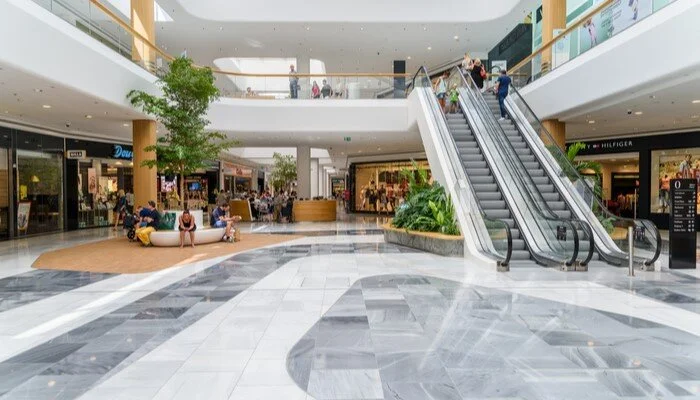
One of the biggest consequences of these bankruptcies is the fact that the malls housing them are also failing. This may be due to the e-commerce industry, which is undoubtedly problematic for shopping malls.

With that in mind, we thought it prudent to advise landlords on how they can reposition a failing mall and still find success. Let's take a look at what you can do.

Why Are Malls Failing?

The shopping mall rose to popularity in the 70s and 80s. Consequently, developers used this opportunity to build, and by 2016, the U.S. had 23.5 square feet of retail space per citizen. To understand how massive that is, Canada and Australia have 16.4 and 11.1 square feet, respectively. The two countries are right behind the U.S., which has the largest square feet of retail space per citizen on the planet.

So, in many ways, the malls ruined themselves with such massive expansion. In the world of today, there isn't enough need for such an enormous number of retail spaces. The newer generations are less and less interested in shopping, and when they are, they prefer to shop online than to go to the mall. Essentially, there isn't enough business for malls to stay open.

How Can You Find Success with a Failing Mall?

Even though the malls are failing, the buildings can still be used. They are massive investments that cannot be left to rot.

Landlords can reinvent the mall by adding something new to it, like chef-driven restaurants and movie theatres, for example. However, most of these improvements and changes are expensive, and there is still no guarantee that they will succeed.

If a mall is failing, there is no reason to keep it as a retail asset. Naturally, you can sell it if you manage to find a suitable buyer with a large enough offer. However, you can also try out some of the several available repositioning options.

How to Reposition a Mall

Shopping malls are large buildings, and one of the best ways to use them that's not retail-oriented is to turn them into warehouse facilities. Instead of using the building for selling products, it can be used for product distribution, as their location is often useful for it.

Outside of that, a failing mall can be turned into a:

• Farmer’s market

• Park

• Church

• College campus

• Medical facility

• Residential property

Many options exist, but you still need to choose one that’s best for you. You also need to consider the location of the property, what commercial tenants are looking for in the area, and what the current macro trends are. A radical change in the use of the property demands for a careful and detailed analysis.

After taking everything into careful consideration, you can be confident that the decision you make will pay off in the end. For more information, you may reach us at jkillinger@cbicommercial.com

What You Need To Know Before Signing A Commercial Real Estate Lease

contract for blog today.JPG

Many business owners make a mistake by rushing into signing a lease after making a seemingly fantastic deal. They forget that after signing, there's no going back. That's why it's essential to make sure everything is in order before doing so.

With that in mind, we wanted to tell you all the things you should look into before you finally sign any real estate lease.

Read and Understand the Entire Lease

Nobody likes reading long contracts, but when it comes to real estate leases, you need to. Many landlords use standard leases with general terms, but they can still make mistakes and forget to add something specific to your deal. What’s worse, they can easily add a clause that you might not like.  Also, even if the lease is a “standard” form, you can still negotiate the language to protect you better.

So make sure you read the entire lease and check with a commercial real estate lawyer that specializes in leases to see that everything is in order. 

Don’t Rush the Negotiations

The negotiations are crucial in any real estate deal. You should never rush them, and you should never accept the first offer you get from the landlord. Refuse and try to negotiate the price or other concessions like facility costs, pass-through protections or tenant improvements. 

Important advice: Always be prepared to walk away. If you portray that willingness, the landlord will look at you in a different light, and you'll be in a position from which you can get much more than you have previously hoped to get. 

Are the CAM Fees All Right with You?

The common area maintenance or CAM fees are an essential part of any commercial real estate lease. They state how much of the building’s maintenance you’ll have to cover and how much the landlord will cover. The fee should be based on the percentage of the building you’ll rent, but some landlords try to increase the fees even if that doesn’t correspond to the percentage of your part. Also, what fees should be included in the CAM fees should be reviewed and approved.

Remember, you can, and you should negotiate CAM fees.

Is There an Arbitration Clause?

Disputes can always happen, which is why your lease should have an arbitration clause in it. Most do, but not all will contain this clause. Make sure you check if yours does and if it gives you the right to participate in the selection of an arbitrator and other decisions that relate to arbitration.

Make Sure You Do a Professional Assessment of the Property Beforehand

Even if the property looks good, it's still essential to get a professional to assess the location and the building itself. It will ensure everything is the way it was promised. What's more, only an expert can do a proper assessment of the building. 

Hire Experienced Agents

Before reaching any deal, it’s best to hire the service of an experienced real estate agent. They are not only great at finding you the best deals possible, but they can also assist you in the negotiation process. A good agent will advise you, make recommendations for service providers that specialize in this field (attorneys, inspectors, expeditors, etc…), and ensure you cover everything that matters before you sign the lease.

For more information, you can reach us at jkillinger@cbicommercial.com.